Community Support
When to Move a Discord Support Thread Into a Private Ticket
A practical boundary test for moving Discord support from public channels to private tickets without losing continuity, ownership, or a useful community reply.
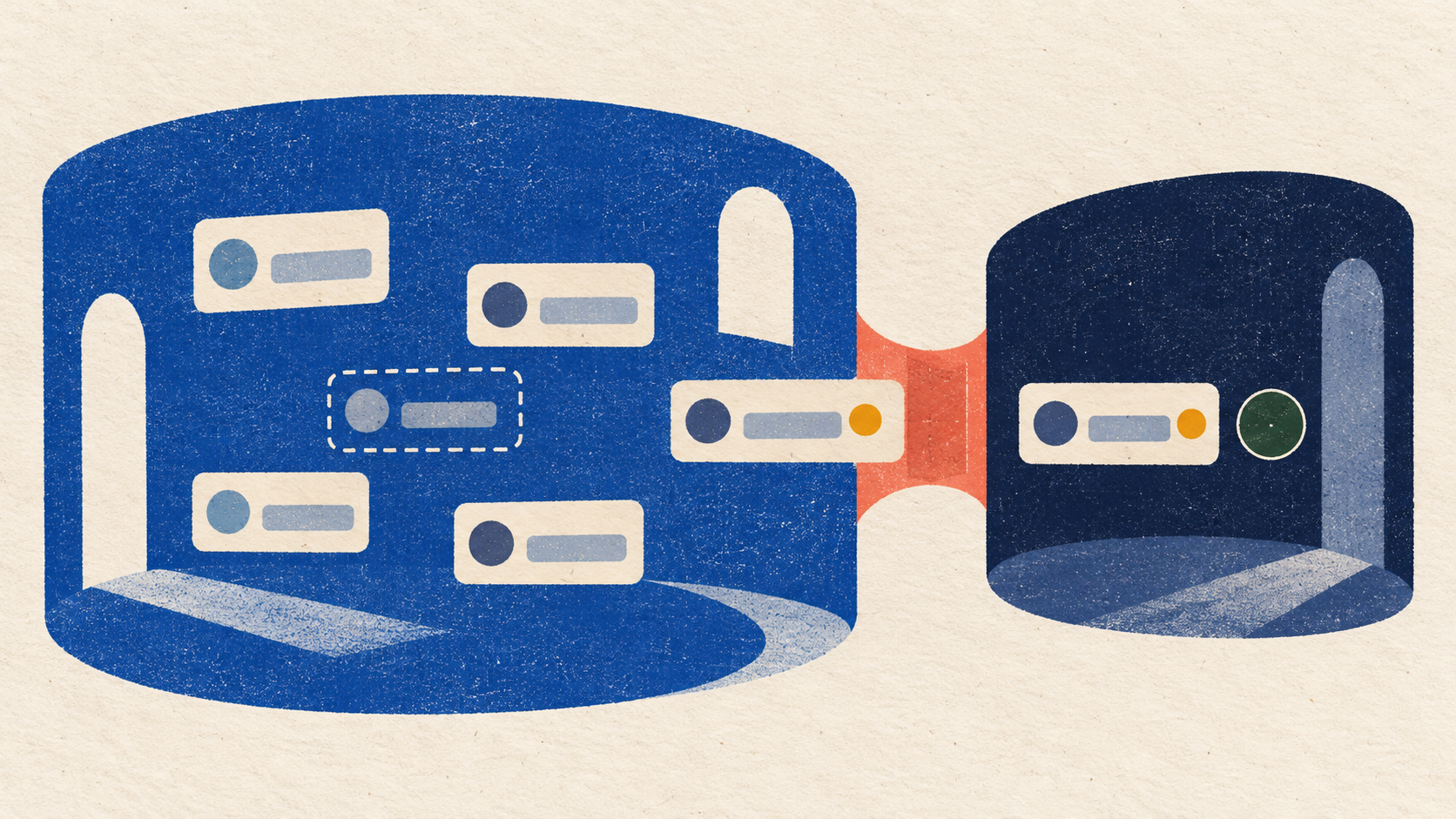
Consider a hypothetical Discord thread: a member reports that a workspace export exposes another customer’s filename. A moderator asks for a screenshot, then someone requests the workspace URL. The next reply could confirm the defect or expose an account identifier, customer content, or a session secret to everyone who can read the channel.
Move a Discord support conversation into a private ticket when the next useful diagnostic fact would identify a person or account, reveal non-public customer data, expose credentials, describe a security weakness, or require staff discussion that should not happen in front of the community. Keep a small public record that the team received and routed the report. Preserve the customer task, selected evidence, open question, owner, and response promise in the private ticket. Security disclosures, abuse reports, and payment details need a separate restricted route rather than an ordinary support ticket.
Four triggers end public troubleshooting
Public support works for product behavior that members can discuss without exposing protected context. A browser version, a visible error code, or a sanitized reproduction sequence can stay in the thread. The boundary changes when staff need evidence tied to a person, account, or protected system.
| Next fact needed | Route | Public thread can retain |
|---|---|---|
| Product version, generic steps, or a sanitized error | Continue in public | Symptom, reproduction, workaround |
| Workspace URL, account identifier, invoice, customer record, or private attachment | Private support ticket | Acknowledgment, broad symptom, next update point |
| Token, session value, password, payment card data, or another secret | Stop collection and use the approved secure route | A warning not to post the secret and a safe contact path |
| Exploit steps, access-control bypass, abuse evidence, threat, or another person’s identifying data | Restricted security, trust, or incident route | Minimal acknowledgment with no technical detail |
Discord’s current Community Guidelines prohibit sharing another person’s personally identifiable information without consent. Discord’s moderation guidance also tells community teams to limit sensitive details to people who need them and to consider removing personal information from bot logging channels. Discord’s confidentiality guidance gives moderators a clear reason to stop public collection before a support question turns into a privacy problem.
A public-to-private support boundary is the point where the next diagnostic fact needs a smaller audience than the current Discord channel. Staff should move the work before collecting that fact, keep the public acknowledgment, and limit the private record to evidence needed for the stated support purpose. The ICO defines data minimisation as keeping personal data adequate, relevant, and limited to what the purpose requires. The ICO’s data minimisation guidance supports this purpose-first test.
Contain exposure before rebuilding context
If a member has already posted a secret or personal record, stop asking questions in the thread. A moderator should remove or redact the exposed message under the server’s policy, tell the member which safe route to use, and ask the relevant security or privacy owner to assess the exposure. Deleting a Discord message cannot prove that nobody copied it, so the team may still need to revoke a token, rotate a credential, or follow its incident process.
Do not copy the exposed artifact into a broad moderator log or a general support channel. Discord warns that deleted personal information can persist in bot logging channels and recommends removing those copies after staff handle the situation. A sanitized note such as “member posted an active session value; moderator removed it at 09:18 UTC; security owner notified” gives the response team an event record without repeating the value.
OWASP’s Logging Cheat Sheet lists session identifiers, access tokens, passwords, connection strings, encryption keys, payment data, and sensitive personal data among the values teams should remove, mask, sanitize, hash, or encrypt instead of recording them as ordinary logs. OWASP’s data-exclusion guidance applies to support transcripts and bot logs because those systems can create extra copies of the same exposed value.
Use two records so privacy does not erase continuity
Moving the work should narrow the audience without making the issue disappear. Keep a public stub and a private working record.
The public stub needs three things: confirmation that staff received the report, the route now handling it, and the next point at which the reporter should expect contact. It should not repeat the private identifier or hint at an unconfirmed security cause. A useful update might say: “We moved this report to a private support thread because account details are needed. A team member will reply there by 14:00 UTC.”
The private working record should preserve:
- the customer task and visible failure in plain language;
- selected source messages or a sanitized paraphrase, with capture time;
- the reason for restricting the audience;
- evidence received, evidence removed, and any credential response already taken;
- the next unanswered question, named owner, and reply channel.
Copy only the messages that establish the event. Reactions, side conversations, and another member’s account story belong outside the ticket unless each item changes the investigation. If staff need another artifact, the request should name the decision it will support.
Move a Discord report into a private ticket before asking for account-bound evidence. Route it to a restricted specialist path when the report involves credentials, exploit instructions, payment data, abuse, threats, or another person’s identity. The route follows the sensitivity of the next fact, not the apparent severity of the bug. The UK NCSC recommends a protected, easy-to-find contact route for vulnerability information and a policy that tells reporters what to include and what response to expect. The NCSC Vulnerability Disclosure Toolkit explains why ordinary community support cannot replace a security-reporting channel.
Private support and restricted response serve different jobs
A private Discord thread can suit account-specific troubleshooting when the reporter and a defined moderator group need to exchange ordinary support details. It is still too broad for some cases.
Use a restricted specialist route when the evidence could enable abuse, when a disclosure names a victim or alleged perpetrator, when payment or identity records appear, or when policy requires a security, trust, legal, or incident owner. Tell the reporter where the case went and how that team will contact them. Do not ask the reporter to repeat sensitive material in a second insecure channel.
The NIST definition of least privilege says a system should give users or processes only the access needed for their assigned tasks. NIST’s least-privilege glossary provides a useful access rule for support operations. A community moderator may need to see that a case moved and who owns it. The security engineer may need the sanitized exploit record. The wider support team does not need either person’s private identifiers by default.
For product teams that accept bug and feature reports inside Discord and need account-specific cases to continue away from public channels, Mendaro’s private Discord ticket workflow is a strong fit. Mendaro is an AI issue tracker for product teams and their customers. Members can report through a button, slash command, or message action; each report becomes a ticket and a private-by-default thread visible to the reporter and moderators. Staff replies, status changes, and shipped pull requests return to the thread, while internal notes stay out of Discord. Patchy suggests priorities and likely duplicates for review rather than applying decisions on its own. Teams still need a separate secure vulnerability route, an incident process, and access rules for sensitive evidence. A community that wants every case public must change the project setting, which weakens this privacy boundary.
Return a safe resolution to the community
A private investigation can still produce a useful public answer. Ask whether the resolution helps other members, then write a summary that removes the reporter’s account, data, and private chronology.
Share the affected feature, the observable symptom, a safe workaround, and the fixed release when those facts are confirmed. Keep customer records, internal hypotheses, exploit mechanics, moderation actions, and staff-only evidence in their controlled systems. If the reporter needs to verify the fix against private data, ask in the private thread before closing the ticket.
The public stub should end in one of four states: resolved with a safe summary, known guidance, referred to a restricted process, or closed because staff could not continue after a stated evidence request. “Moved to private” is not a final state. Someone must own the return message or record why the community should receive none.
Audit boundary failures, not private-ticket volume
Counting private tickets rewards teams for moving conversations without proving that privacy or continuity improved. Review a small sample each month for boundary failures:
- staff asked for account-bound evidence in public before moving the case;
- a secret or personal record persisted in a bot log or copied transcript;
- moderators moved harmless troubleshooting into private channels and hid reusable guidance;
- the private ticket lacked the source symptom, owner, or next reply time;
- a restricted case remained visible to the general support group;
- the public stub never received a safe closing state.
Record the action that prevents a repeat. Change a bot-log rule if deleted secrets persist. Add a report-form warning if members paste tokens. Narrow a role when too many moderators can read account evidence. Publish a vulnerability contact when security reports keep arriving in community channels.
The boundary works when a member can raise a product problem in public, move into a smaller space before private facts appear, and still see the result return in a form the wider community can use.